Healthcare
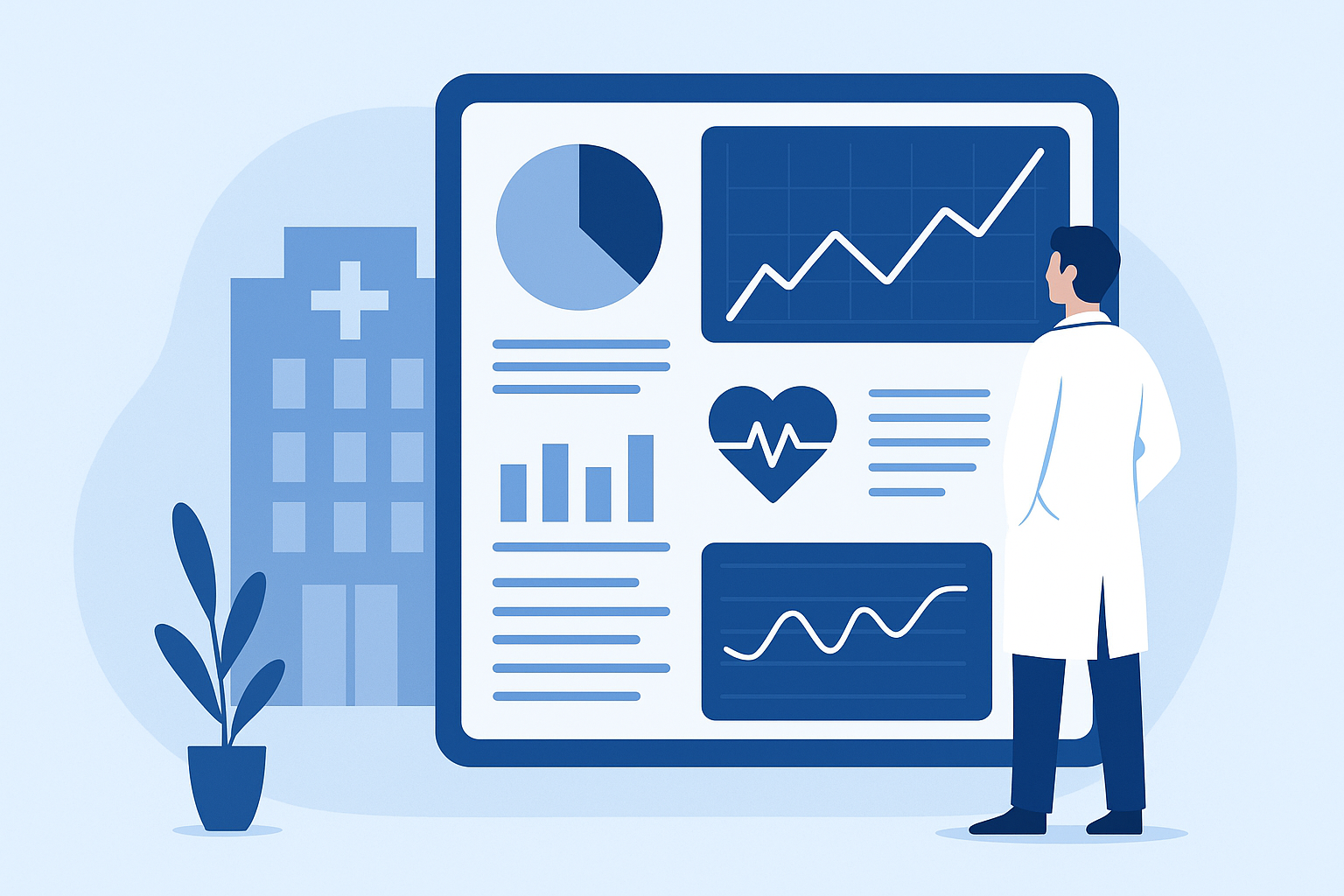
Healthcare runs on complex, high-stakes decisions — and data is everywhere, but rarely connected. AI helps turn scattered clinical, operational, and patient signals into actionable guidance: smarter prioritization, earlier detection of risk, and better coordination across teams.
In practice, the biggest wins often look unglamorous: fewer delays, clearer work queues, tighter follow-through, and less time lost chasing information.
In healthcare, AI is transforming care delivery across the entire value chain. In diagnostics and medical imaging, AI systems analyze X-rays, MRIs, and other scans faster and often more consistently than manual review, detecting subtle patterns that may escape the human eye. In drug discovery and clinical research, AI accelerates the identification of potential drug candidates, predicts treatment responses, and shortens clinical trial cycles. Operationally, administrative automation reduces burden through ambient clinical note-taking, intelligent billing, scheduling, and streamlined management of electronic health records (EHRs). The promise of personalized medicine comes from tailoring treatments using genetic, lifestyle, and molecular data, improving outcomes—particularly in areas such as oncology. On the patient side, AI-driven engagement tools support symptom checking, medication reminders, virtual consultations, and real-time assistance through conversational interfaces. Finally, disease prediction and remote monitoring l everage predictive models to forecast outbreaks, identify high-risk patients, and continuously monitor health signals, enabling earlier intervention and more proactive care.
Manufacturing
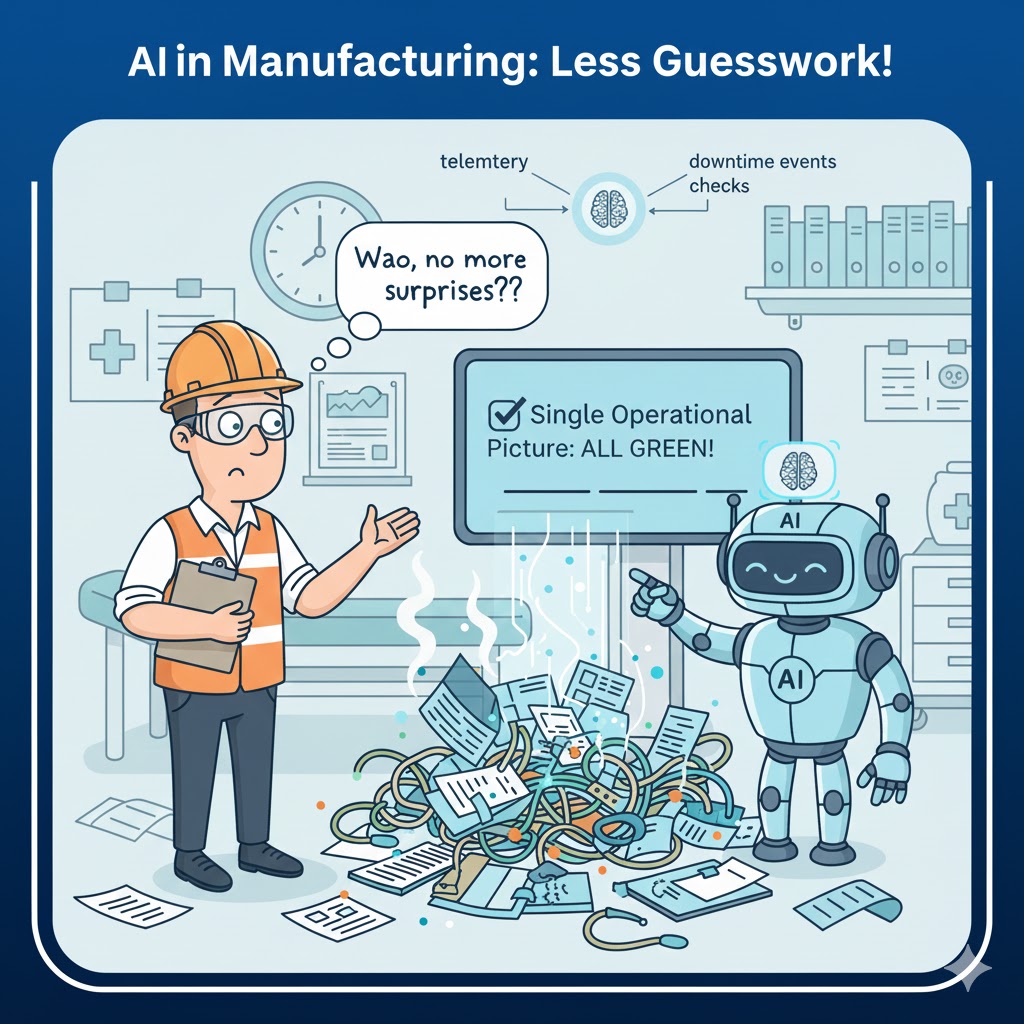
Plants generate a constant stream of signals — telemetry, downtime events, quality checks, maintenance notes, material movement, and staffing realities. AI helps connect these signals into a single operational picture, so teams can spot issues earlier and respond with less guesswork.
The value shows up as smoother throughput, fewer surprises, faster root-cause narrowing, and less reliance on manual reporting just to understand what happened last shift.
AI is reshaping modern manufacturing through predictive maintenance that analyzes sensor data to anticipate equipment failures before they occur, significantly reducing downtime and costly disruptions. In parallel, computer vision–driven quality control enables real-time defect detection with greater consistency than manual inspection, cutting scrap and rework. Across the shop floor, process optimization models improve production scheduling, energy usage, and resource allocation, lowering operating costs while increasing throughput.
Finance
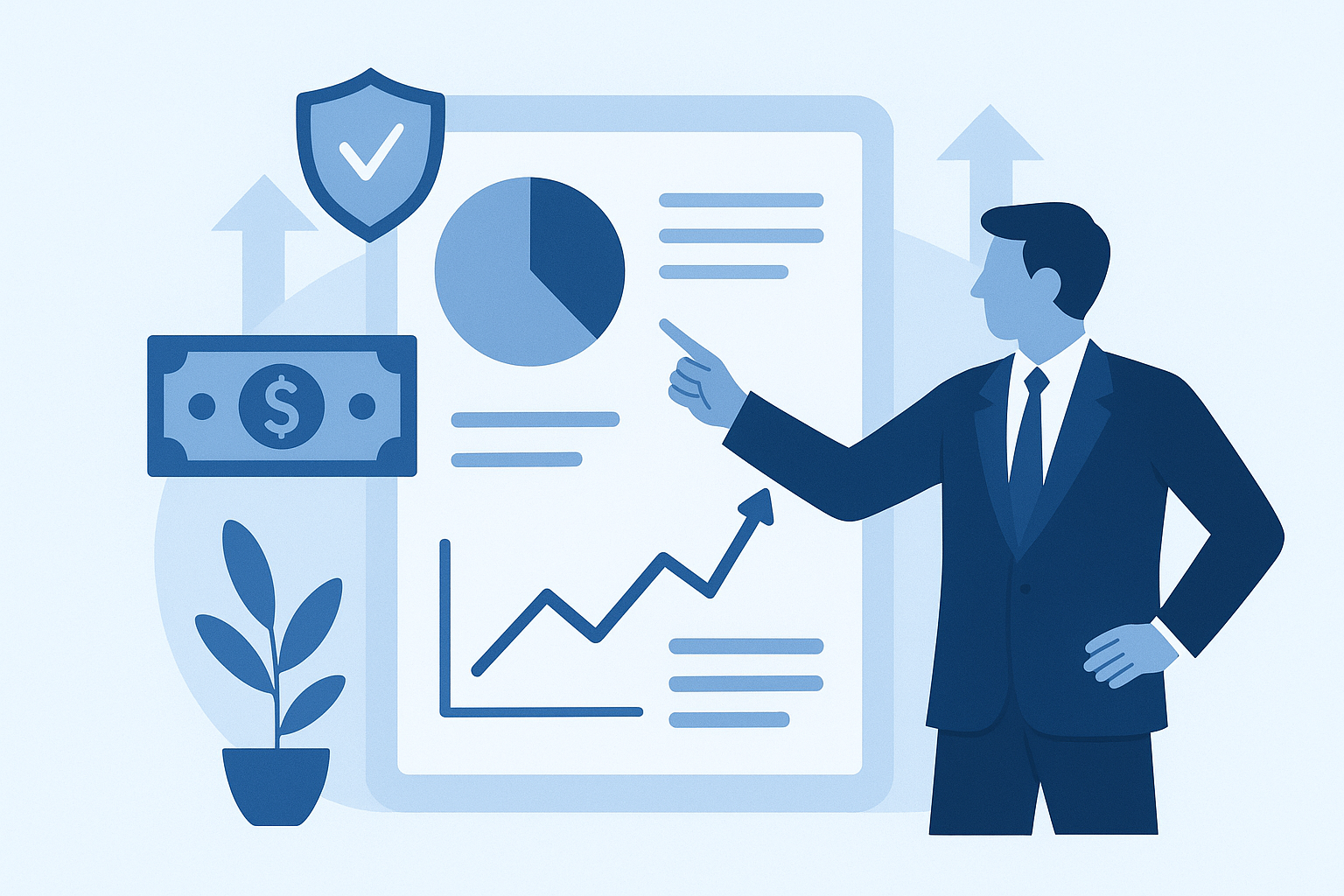
Finance teams live in a world of constraints — risk, compliance, timing, and accountability. AI is increasingly used to strengthen monitoring, improve detection of anomalies, and reduce friction in analysis workflows.
Whether the job is forecasting, reconciliation, fraud signals, or portfolio reporting, the goal is the same: faster clarity with stronger control.
In finance, AI is increasingly embedded in day-to-day operations to improve efficiency, control, and foresight. Through automated financial processes, AI handles repetitive tasks such as invoice processing, payment matching, and data entry, significantly reducing manual effort and errors while freeing finance teams to focus on higher-value analysis. Predictive analytics and forecasting models combine historical financial data, real-time operational metrics, and external market signals to deliver more accurate demand, cash flow, and liquidity forecasts, supporting better working capital management and investment planning. In integrated planning and analysis (FP&A), AI unifies data from ERP, supply chain, and production systems to enable dynamic budgeting, scenario modeling, and faster responses to market shifts. At the same time, fraud detection and risk management systems continuously monitor transactions to identify anomalies and potential compliance issues in real time. AI also supports compliance and regulatory reporting by automating monitoring, flagging discrepancies, and streamlining audit preparation, reducing the risk of penalties. Beyond core finance, supply chain cost optimization leverages operational data to control inventory, manage multi-entity invoicing, and improve cross-border compliance, directly impacting margins. Finally, through enhanced decision-making and energy and cost efficiency, AI delivers timely insights that help leaders allocate resources more effectively, optimize energy usage in production facilities, and strengthen the organization’s overall financial performance.
Retail
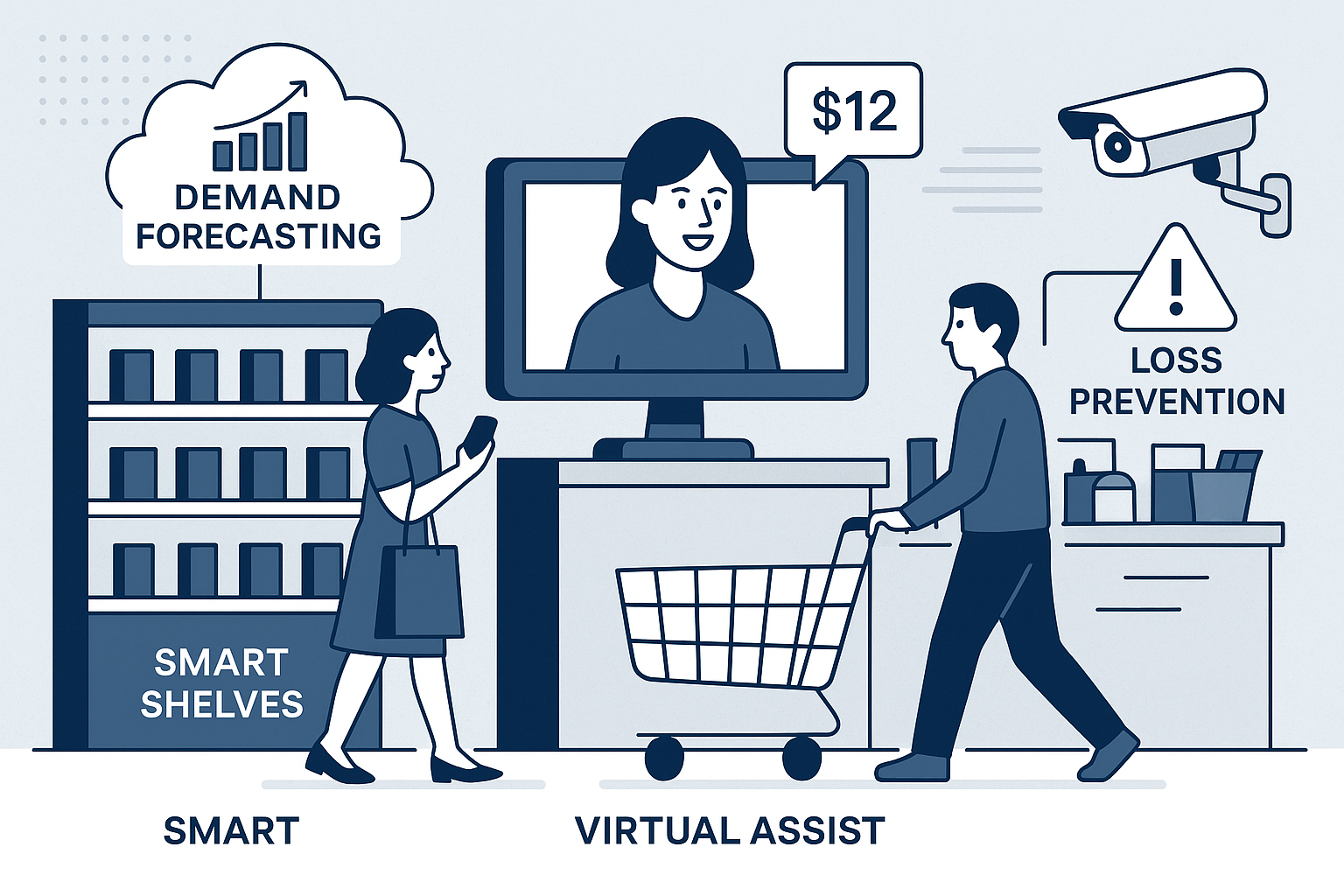
Retail is a fast-feedback business: demand shifts, inventory moves, promotions change behavior, and customer expectations keep rising. AI helps teams predict demand more accurately, personalize customer experiences, and reduce waste across inventory and operations.
Done well, it’s not “more dashboards” — it’s better decisions: what to stock, where to place it, how to price it, and how to keep service levels steady when reality changes.
In retail, AI is reshaping both operations and customer experience by connecting data-driven intelligence directly to the moment of purchase. Through hyper-personalized recommendations, AI analyzes browsing behavior and purchase history to suggest relevant products across digital and in-store channels, while AI-powered chatbots and virtual assistants provide round-the-clock support, guiding customers through discovery, questions, and checkout. Innovations such as virtual try-ons improve confidence in fit and style, reducing returns and friction. Behind the scenes, predictive demand forecasting and intelligent inventory management optimize stock levels, prevent overstocking or stockouts, and reduce waste—particularly in grocery and perishable categories. Retailers further benefit from supply chain optimization, where AI-driven logistics improve routing, cut fuel costs, and accelerate fulfillment. On the pricing and risk front, dynamic pricing adapts in real time to demand and market conditions, while fraud detection and loss prevention systems identify suspicious activity and shrinkage patterns. Within stores, computer-vision–based planogram compliance ensures shelves are stocked correctly, and AI-driven workforce optimization aligns staffing with peak traffic. Finally, back-end automation and market intelligence leverage generative AI to enrich product data, analyze competitor trends, and inform strategic decisions—creating seamless omnichannel experiences that boost efficiency, lower costs, and strengthen customer loyalty.
Concludingly
Beyond these examples, the impact of AI extends across many other industries—from logistics and transportation to energy, real estate, education, and the public sector. Wherever organizations struggle with fragmented data, manual processes, and slow decision cycles, AI offers a way to surface insight faster and act with greater precision. As these technologies mature, the real transformation will not come from isolated use cases, but from embedding intelligence directly into everyday workflows—quietly reshaping how decisions are made, operations are run, and value is created.